
“Would you buy this property?” – should a surveyor tell you whether to go ahead?
18 January 2026

Author: Richard Peck
5 min read
One of the most common questions we get asked by clients is also one of the simplest:
“Would you buy this property?”
It’s an entirely understandable question. Buying a home is expensive, emotional, and often stressful. By the time a survey is carried out, buyers have usually committed a significant amount of time, money and mental energy to the process, and the survey report can feel like the final hurdle.
Buyers often ask this question after receiving a survey and wondering whether they should still go ahead with the purchase, particularly when defects or unexpected issues have been highlighted.
However, while it’s a question clients often appreciate having answered, it’s also one that requires a fair amount of nuance.
Why buyers ask “should I buy this house?” after a survey
In most cases, “would you buy it?” isn’t really about the property itself. It’s shorthand for a number of other concerns:
Is this house riskier than normal?
Am I missing something serious?
Am I about to make an expensive mistake?
From a consumer behaviour point of view, this makes complete sense. Buyers are often experiencing decision fatigue, especially if they’re buying for the first time. Asking a surveyor is a way of seeking reassurance from an independent professional who looks at properties every day.
Why surveyors aren’t typical home buyers
One of the difficulties with answering this question directly is that surveyors are not representative of most buyers. We spend our working lives identifying defects and, over time, that inevitably changes how we perceive risk. Issues that might feel alarming or overwhelming to a buyer can seem routine to a surveyor, simply because we encounter them so frequently.
Many surveyors also have experience renovating or improving homes, tend to have established contacts within the building trades, and are more familiar with how defects are usually prioritised and managed in practice. As a result, surveyors are often more comfortable living with disruption while works are carried out. What a surveyor might happily take on, therefore, is not necessarily what a buyer should take on.
The importance of personal circumstances
More importantly, whether a property is “right” has far more to do with the buyer than the building itself. The same house can be a sensible purchase for one person and completely unsuitable for another, depending on individual circumstances such as stage of life, family commitments, working hours, financial flexibility and contingency funds, as well as the time and appetite available for managing repairs or improvements.
Less tangibly, personality also plays a role. Older and more complicated homes often involve a degree of uncertainty, ongoing maintenance and periods of disruption. Buyers who are comfortable with this, and who are able to take a long-term, pragmatic view when issues arise, may find such properties entirely manageable. For others, particularly those who prefer certainty, predictability and minimal disruption, the same issues can become a significant source of stress. It is one of the reasons why two buyers can look at the same survey report and reach entirely different conclusions.
A personal example
This is something I’m very conscious of because of my own experience.
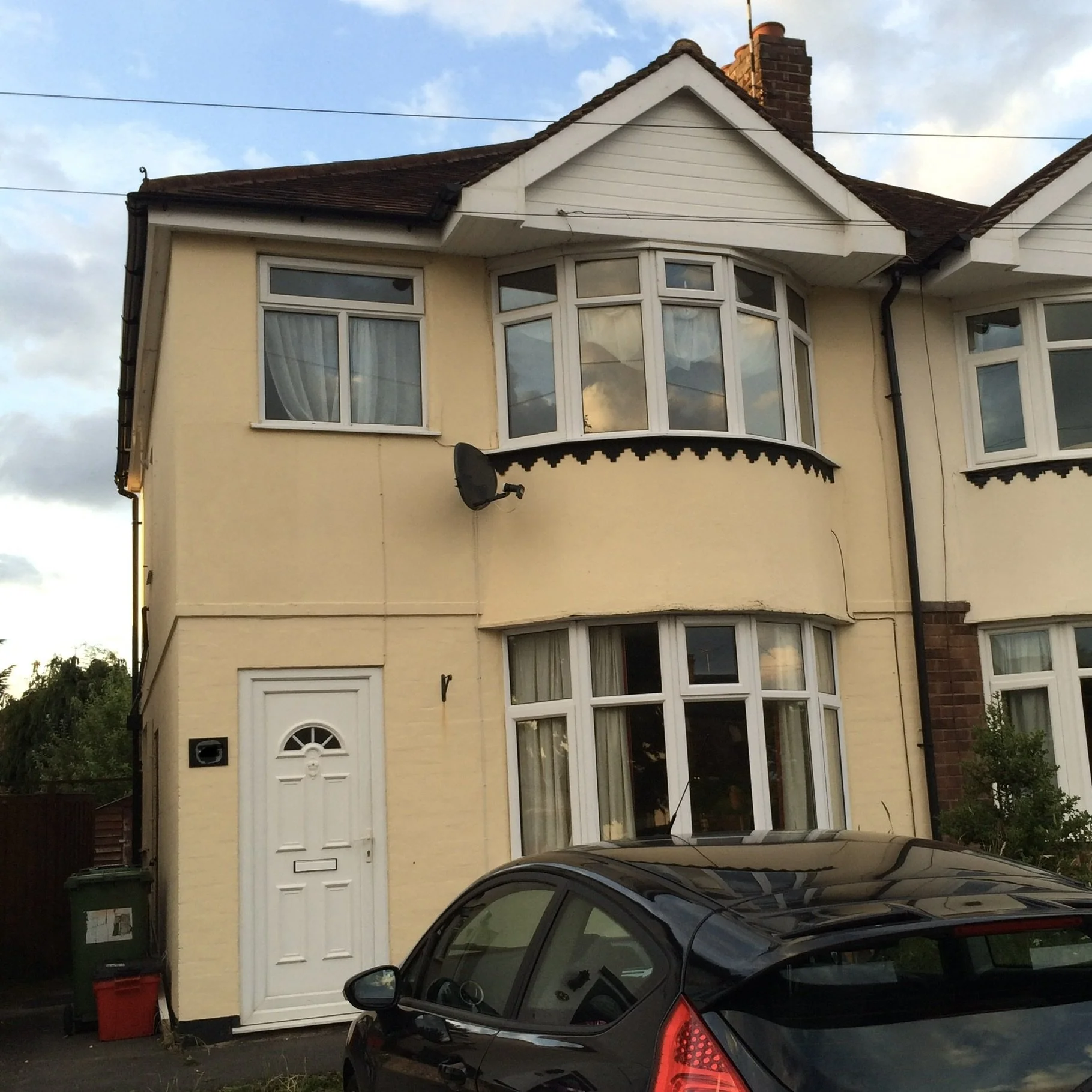
My wife and I bought our first home in Leamington Spa in our early twenties. It was a fairly typical 1930s semi-detached house and, on the face of it, not an unusual purchase. However, the house did need a reasonable amount of work and, had it been the subject of a full pre-purchase survey, it would have resulted in a lengthy report highlighting a number of defects. The chimney leaked during periods of prolonged heavy rain, the original roof was nearing the end of its life, and the gutters were blocked and overdue maintenance. Internally, there was some localised dampness to the front bay and the kitchen was small and dated, while externally both the garden and driveway required attention.
None of these issues were unusual or unexpected for a house of that age. As a surveyor, I would now look at that list and see a series of manageable, fairly typical defects.
However, as first-time buyers, we did what many people do and committed almost all of our available funds to the deposit, stamp duty and professional fees, leaving very little set aside for works. What looked reasonable on paper felt quite stressful in reality. We both ended up working additional hours to save for the repairs — Saturdays for me, and additional locum shifts for my wife. The house was absolutely liveable, but the financial and time pressure was real.
The property didn’t change. Our circumstances did.
What a good survey should do instead
This is why, rather than answering “would you buy it?” with a simple yes or no, our role as surveyors is to help clients understand:
what the issues actually are (and which are more serious than others),
what the implications might be if defects are not addressed,
the likely scale and timing of costs,
the level of disruption involved in carrying out works,
which issues are common for that type and age of property, and which are not.
This is particularly important for older or traditionally built homes, where a more detailed inspection — such as a Level 3 Building Survey — is often appropriate.
Armed with this information, buyers are in a far better position to decide whether a property works for them.
In many cases, a more useful question than “would you buy this property?” is:
“Knowing what we now know, does this property still suit your circumstances?”
That keeps the decision where it belongs — with the buyer — while still recognising the value of professional advice in understanding risk.
Final thoughts
It’s completely natural to want reassurance when buying a home, and asking your surveyor for their opinion is understandable. But property decisions are rarely binary, and what suits one buyer may not suit another.
A good survey shouldn’t make the decision for you. It should give you clarity, context and confidence, so that whatever decision you make is an informed one.
Common Questions
Should I still buy a house if the survey finds problems?
Most surveys identify defects, particularly in older homes. The key is understanding how serious those issues are, the likely cost and disruption involved in putting them right, and whether the property still suits your circumstances.
Can a surveyor tell me whether to buy a property?
A surveyor can explain the risks, implications and priorities identified during the inspection, but the decision itself depends on personal factors such as finances, time available and tolerance for disruption.
Further insights
28 July 2023
12 September 2024